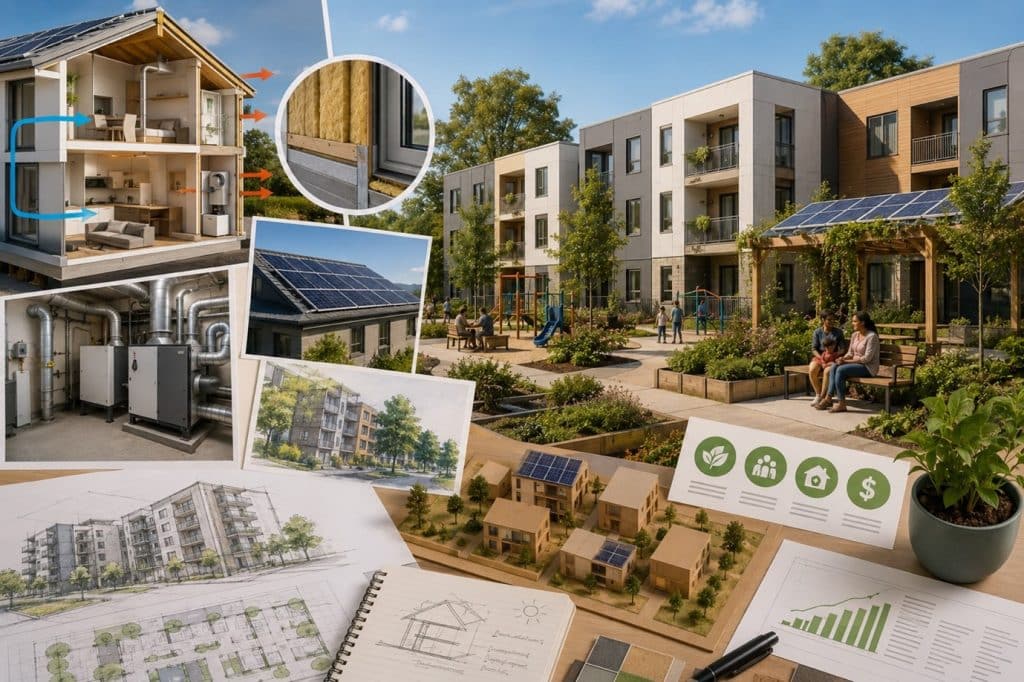
Affordable housing plays a critical role in addressing both social equity and climate challenges. This course explores how sustainability frameworks such as Passive House and LEED are being applied to affordable housing developments to improve energy performance, reduce operating costs, and create healthier living environments for residents. Through a series of case studies from the United States, participants will examine how design strategies, policy support, and community-focused planning can help deliver housing that is both environmentally responsible and economically accessible. To support different learning styles, this article course also includes a complimentary audio-visual explainer video and infographics designed to reinforce key concepts and provide additional clarity. These supplemental materials are intended to enhance the learning experience and do not replace the primary course article.
Housing affordability and climate resilience are two of the most pressing challenges facing cities and communities today. As buildings account for a significant portion of global energy consumption and greenhouse gas emissions, improving the performance of residential buildings is essential for meeting climate goals. At the same time, rising housing costs and energy burdens continue to affect vulnerable populations. Sustainable design frameworks such as Passive House and LEED are increasingly being applied to affordable housing developments to address these challenges simultaneously. These frameworks provide structured approaches to improving building performance, reducing energy demand, enhancing indoor environmental quality, and promoting long-term resilience. This course explores how these frameworks are being implemented in real-world affordable housing projects. Participants will review key concepts behind Passive House and LEED residential strategies before examining several case studies, including: • Passive House multifamily housing developments • LEED-certified supportive housing communities • workforce housing developments designed for climate-responsive performance • neighborhood-scale affordable housing redevelopment projects Through these examples, learners will explore how sustainability strategies can reduce energy burden, improve health outcomes, and support long-term housing stability. The course concludes by examining lessons learned from these projects and reflecting on the broader role that sustainable design can play in creating resilient, affordable housing communities worldwide.
Course Rating:
No ratings yet
Total Reviews: 0
Note: Rating is only available after course completion.