
The next chapter of green building has officially begun.
LEED v5 is not just an update—it represents a fundamental shift in how we define, measure, and deliver sustainability in the built environment. For building professionals, this isn’t about learning a new checklist. It’s about rethinking how projects are planned, designed, constructed, and operated.
So the real question is not “What’s new in LEED v5?”
It’s: “Are you ready for what LEED v5 expects?”
🔄 From Credits to Impact
For years, LEED has guided projects through categories, points, and certification levels. LEED v5 keeps that structure—but changes the mindset.
At its core, LEED v5 is organized around three global impact areas:
- Decarbonization
Addressing emissions across operational energy, embodied carbon, refrigerants, water-related energy, and transportation. - Quality of Life
Prioritizing human health, well-being, resilience, accessibility, and occupant experience. - Ecological Conservation and Restoration
Protecting and restoring natural systems through responsible site, water, and material strategies.

Every prerequisite and credit now connects back to these impact areas—shifting the conversation from “What points can we earn?” to:
👉 What outcomes are we trying to achieve?
⚡ What’s Changed—and Why It Matters
LEED v5 responds directly to today’s biggest challenges: climate change, resource constraints, social equity, and long-term performance.
Here are a few of the most important shifts:
- Decarbonization Is Everywhere
Carbon is no longer just an energy issue. It shows up across:
- Materials (embodied carbon)
- Refrigerants
- Water systems
- Transportation
- Construction activities
👉 Meaning: Every discipline now owns part of the carbon story.
- Embodied Carbon Moves Upstream
For the first time, measuring embodied carbon is required.
This changes everything.
Instead of optimizing late, teams must:
- Identify carbon “hot spots” early
- Focus on high-impact materials like concrete and steel
- Use data (EPDs, LCA tools) to guide decisions
👉 The biggest decisions now happen before design is finalized.
LEED v5 introduces three required early assessments:
- Climate Resilience
- Human Impact
- Carbon
These are not paperwork exercises—they are decision-making tools.
👉 If sustainability is not part of early conversations, it’s already too late.

- Resilience Is No Longer Optional
Projects must now plan for:
- Extreme heat
- Flooding and sea level rise
- Wildfires and storms
👉 Buildings are expected to perform not just today—but in future climate conditions.
- Equity and Community Impact Take Center Stage
LEED v5 expands beyond environmental performance to include:
- Affordable and community-serving projects
- Access to transportation and services
- Support for frontline and vulnerable communities
👉 Sustainability is no longer just about buildings—it’s about who benefits from them.
- Health and Well-Being Are Fully Integrated
From indoor air quality to access to nature and community connection, LEED v5 reinforces:
👉 High-performance buildings must also be people-centered buildings.
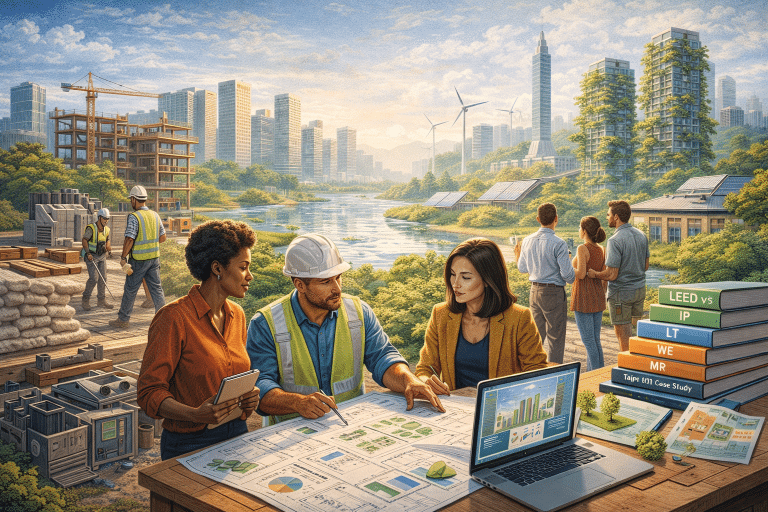
🧠 What This Means for Professionals
LEED v5 changes not just what you do—but when and how you do it.
- Designers → Gain more influence early—but must think in systems
- Contractors → Play a bigger role in materials, carbon, and execution
- Consultants → Shift from documentation to strategy
- Owners & Developers → Make earlier, more impactful decisions
The biggest shift?
👉 Sustainability is no longer a layer—it’s a leadership function.
📘 Where to Start (Without Overwhelm)
If LEED v5 feels like a lot—you’re not alone.
That’s exactly why we’ve created a series of LEED v5-focused courses and resources to help you navigate the transition:
🔹 Start with the fundamentals
🔹 Go deeper into key topics
- Integrative Process (IP)
- Location & Transportation (LT)
- Water Efficiency (WE)
- Materials & Resources (MR / Embodied Carbon)
🔹 Learn through real-world application
These courses are designed to:
- Translate LEED v5 into real project decisions
- Connect concepts to practical strategies
- Help you earn CE hours while building real expertise