
0
0
Subtotal: $0.00

No products in the cart.

Return To Shop

SS Credit: Rainwater Management

The best stormwater system is the one you donโ€™t noticeโ€”because it behaves like nature.

What is the Intent of this Credit?

The goal is to:

๐Ÿ‘‰ reduce runoff volume
๐Ÿ‘‰ improve water quality
๐Ÿ‘‰ replicate natural hydrology of the site

๐ŸŽฏ Big Picture

Rainwater is not wasteโ€”it is a resource.

๐ŸŒ Why This Matters

Typical development:

  • increases impervious surfaces
  • sends stormwater to drains quickly
  • causes flooding and pollution

๐Ÿ’ก LEED Approach

๐Ÿ‘‰ Manage rainwater:

  • on-site
  • close to source
  • like natural land conditions

๐ŸŒฑ How LEED Achieves This

Using:

๐Ÿ‘‰ Green Infrastructure (GI)
๐Ÿ‘‰ Low Impact Development (LID)

๐Ÿ“Œ Common Techniques

  • vegetated roofs
  • bioretention areas
  • porous paving
  • rain gardens
  • rainwater harvesting
  • pervious decking
  • reduced hardscape
  • restored natural landscape

๐ŸŽฏ Key Idea

Manage water where it falls

๐Ÿงฉ Two Compliance Options

โœ… Option 1: Percentile of Rainfall Events

What Does This Mean?

๐Ÿ‘‰ Design the system to manage:

๐Ÿ‘‰ a percentage of rainfall events

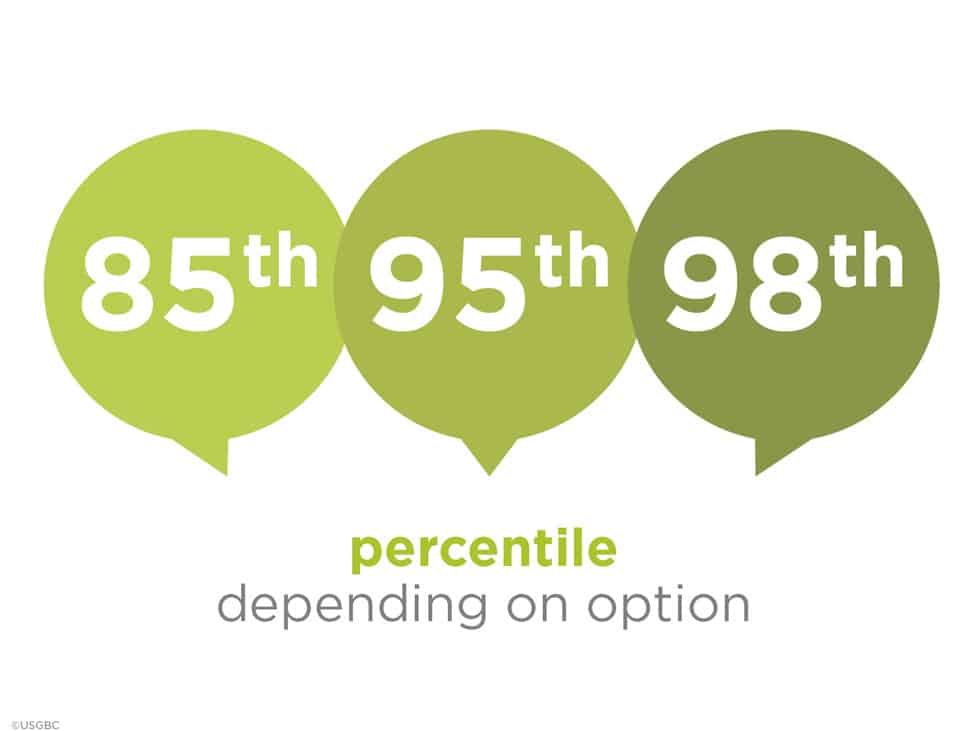
๐Ÿ“Š Common Thresholds

  • 85th percentile
  • 95th percentile

๐Ÿ’ก Example (Very Important)**

๐Ÿ‘‰ 85th percentile means:

  • system captures runoff from 85% of storms
  • only largest 15% overflow

๐ŸŽฏ Exam Insight

Percentile = % of storms managed
(not % of rainfall volume)
โš™๏ธ Steps to Implement

Step 1: Collect Rainfall Data

  • minimum 10 years preferred
  • include seasonal variation

Step 2: Calculate Runoff Volume

๐Ÿ‘‰ For selected percentile

Step 3: Manage That Volume On-Site

๐Ÿ‘‰ Using GI + LID strategies

๐Ÿ™๏ธ Path 3: Zero Lot Line Projects

โ“ What is a Zero Lot Line Project?

๐Ÿ‘‰ Building footprint โ‰ˆ site boundary

๐Ÿ“ Eligibility Requirement

๐Ÿ‘‰ Surrounding density must be:

๐Ÿ‘‰ FAR โ‰ฅ 1.5

(within ยผ mile)

โš ๏ธ Important

๐Ÿ‘‰ If FAR < 1.5 โ†’ NOT eligible

โœ… Option 2: Natural Land Cover Conditions

Concept

๐Ÿ‘‰ Match post-development runoff to:

๐Ÿ‘‰ pre-development (natural) conditions

๐ŸŽฏ Big Idea

After development, the site should behave like it did before.

โš™๏ธ Steps to Implement

Step 1: Identify Natural Land Cover

  • vegetation
  • soil conditions

Step 2: Calculate Natural Runoff

๐Ÿ‘‰ baseline condition

Step 3: Calculate Post-Development Runoff

๐Ÿ‘‰ after construction

Step 4: Manage Difference On-Site

๐Ÿ‘‰ eliminate increase in runoff

๐ŸŽฏ Key Terms

  • Natural land cover = pre-development condition
  • Post-development = after construction

๐ŸŒ Design Approach (Very Important Concept)

Projects should:

  • mimic natural hydrology
  • integrate with watershed
  • use multiple strategies (โ€œtreatment trainโ€)

๐Ÿ’ก Example

Combine:

  • green roof
  • rain garden
  • permeable pavement

๐Ÿง  Where People Get Confused

โŒ Misconception 1:

โ€œRainwater should be drained quicklyโ€

๐Ÿ‘‰ No
๐Ÿ‘‰ LEED promotes infiltration and retention

โŒ Misconception 2:

โ€œPercentile refers to rainfall amountโ€

๐Ÿ‘‰ No

๐Ÿ‘‰ It refers to:
๐Ÿ‘‰ percentage of storm events

โŒ Misconception 3:

โ€œOption 1 and Option 2 are the sameโ€

๐Ÿ‘‰ No

  • Option 1 โ†’ storm-based
  • Option 2 โ†’ condition-based

โŒ Misconception 4:

โ€œZero lot line applies to all urban sitesโ€

๐Ÿ‘‰ No

๐Ÿ‘‰ Must meet:

  • FAR โ‰ฅ 1.5

Official FAQs

What are the two compliance options under Rainwater Management?
1. Percentile of rainfall events
2. Natural land cover conditions
What does 85th percentile rainfall mean?
System manages runoff from 85% of storms
A project manages runoff for 90% of storms. Does it meet 85th percentile requirement?
Yes.
๐Ÿ‘‰ It exceeds the requirement
A project compares post-development runoff to pre-development conditions. Which option is this?
๐Ÿ‘‰ Option 2: Natural land cover
Why does LEED emphasize managing rainwater on-site instead of draining it?
Because:
โ€ข reduces flooding
โ€ข improves water quality
โ€ข restores natural hydrology
โ€ข supports groundwater recharge
Why is using multiple GI strategies recommended?
Because:
โ€ข improves effectiveness
โ€ข mimics natural processes better
โ€ข provides redundancy and resilience

Comments

No comments yet. Be the first to post!

Leave a Reply

Scroll to Top
GBRI is your #1 source for sustainability education with more than 400+ courses to choose from!
gbri-logo

Welcome back!

Login to access your sustainability courses, certificates, badges, community and more!
Celebrate this New Year 2026 With 40% OFF LEED ,WELL, CE & membership Programs!
LEED, WELL, CE & Membership Programs

40% Off

Achieve your sustainability goals for less. Grab your discount before you go.

GBRI

Memorial Day Sale

June 1 to June 15 - 2024

GBRI

Annual Day Sale

March 15 to April 21 - 2024

The journey to become a sustainability guru begins here!
Jeslin Varghese
gbri-logo

Sustainability education should not have any boundaries!

Register now to get started.

OR REGISTER WITH