
SS Credit: Rainwater Management
The best stormwater system is the one you don’t notice—because it behaves like nature.
What is the Intent of this Credit?
The goal is to:
👉 reduce runoff volume
👉 improve water quality
👉 replicate natural hydrology of the site
🎯 Big Picture
Rainwater is not waste—it is a resource.
🌍 Why This Matters
Typical development:
- increases impervious surfaces
- sends stormwater to drains quickly
- causes flooding and pollution
💡 LEED Approach
👉 Manage rainwater:
- on-site
- close to source
- like natural land conditions
🌱 How LEED Achieves This
Using:
👉 Green Infrastructure (GI)
👉 Low Impact Development (LID)
📌 Common Techniques
- vegetated roofs
- bioretention areas
- porous paving
- rain gardens
- rainwater harvesting
- pervious decking
- reduced hardscape
- restored natural landscape
🎯 Key Idea
Manage water where it falls
🧩 Two Compliance Options
✅ Option 1: Percentile of Rainfall Events
What Does This Mean?
👉 Design the system to manage:
👉 a percentage of rainfall events
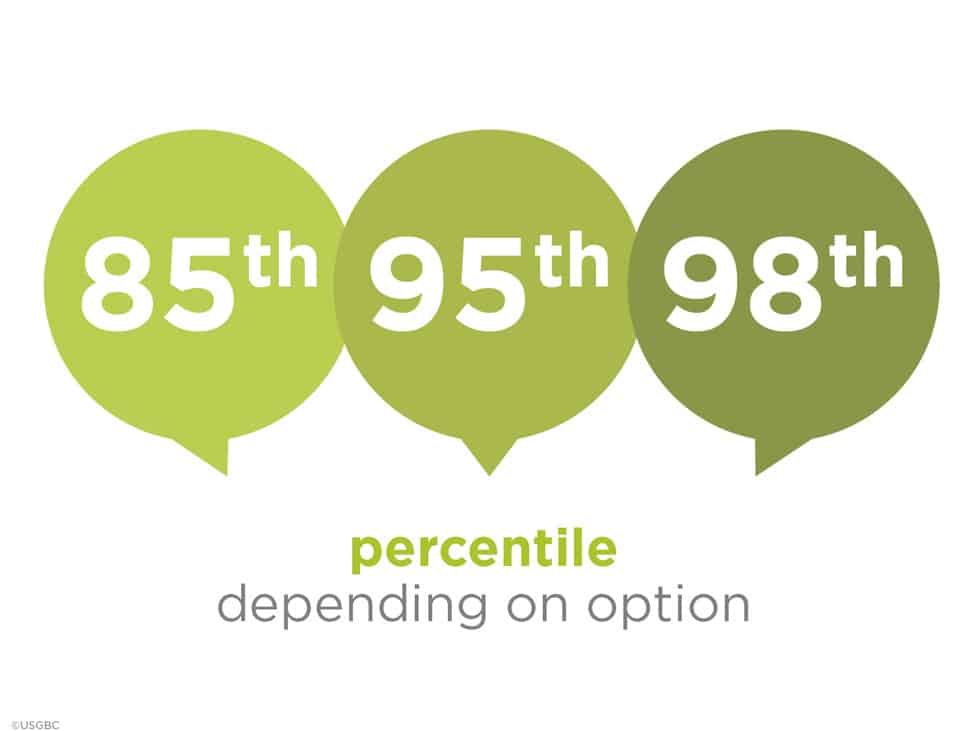
📊 Common Thresholds
- 85th percentile
- 95th percentile
💡 Example (Very Important)**
👉 85th percentile means:
- system captures runoff from 85% of storms
- only largest 15% overflow
🎯 Exam Insight
Percentile = % of storms managed
(not % of rainfall volume)
⚙️ Steps to Implement
Step 1: Collect Rainfall Data
- minimum 10 years preferred
- include seasonal variation
Step 2: Calculate Runoff Volume
👉 For selected percentile
Step 3: Manage That Volume On-Site
👉 Using GI + LID strategies
🏙️ Path 3: Zero Lot Line Projects
❓ What is a Zero Lot Line Project?
👉 Building footprint ≈ site boundary
📏 Eligibility Requirement
👉 Surrounding density must be:
👉 FAR ≥ 1.5
(within ¼ mile)
⚠️ Important
👉 If FAR < 1.5 → NOT eligible
Official FAQs
What are the two compliance options under Rainwater Management?
2. Natural land cover conditions
What does 85th percentile rainfall mean?
A project manages runoff for 90% of storms. Does it meet 85th percentile requirement?
👉 It exceeds the requirement
A project compares post-development runoff to pre-development conditions. Which option is this?
Why does LEED emphasize managing rainwater on-site instead of draining it?
• reduces flooding
• improves water quality
• restores natural hydrology
• supports groundwater recharge
Why is using multiple GI strategies recommended?
• improves effectiveness
• mimics natural processes better
• provides redundancy and resilience
Comments
No comments yet. Be the first to post!