LT Credit: Sensitive Land Protection
The best site is not untouched land—it’s land that has already been used.
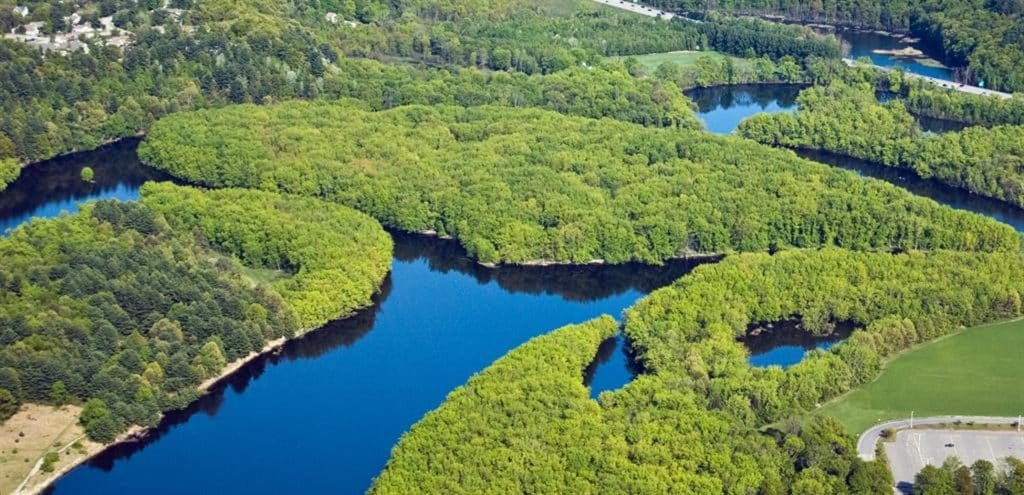
✅ Option 2: Avoid Sensitive Land
Used when:
👉 Project cannot be entirely on previously developed land
Requirement: Do NOT disturb sensitive land types
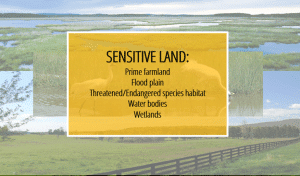
🚫 Sensitive Land Types (VERY IMPORTANT)
You must avoid development on or near:
- 🌾 Prime Farmland
- identified by NRCS soil survey (or local equivalent)
- includes:
- prime farmland
- unique farmland
- farmland of statewide/local importance
👉 Defined by U.S. Code of Federal Regulations (CFR)
- 🌊 Floodplains
👉 Avoid areas with:
- ≥1% annual chance of flooding
(also known as 100-year floodplain) - based on:
- legally adopted flood maps
- local/state designation
- 🐾 Habitat for Threatened or Endangered Species
Must avoid habitat for species that are:
- listed under:
- U.S. Endangered Species Act
- state endangered species lists
- OR classified by NatureServe as:
- GH, G1, or G2
👉 Requires coordination with:
- state wildlife agencies
- Natural Heritage Program
- 💧 Wetlands and Water Bodies
📏 Critical Distances (HIGH PROBABILITY EXAM QUESTION)
Avoid:
- Within 50 feet (15 m) of wetlands
- Within 100 feet (30 m) of water bodies
👉 Except for minor improvements
🎯 Exam Insight
Wetlands → 50 ft
Water bodies → 100 ft
👉 These numbers are frequently tested
Official FAQs
What are the two compliance options for Sensitive Land Protection?
1. Build on previously developed land
2. Avoid disturbing sensitive land types
2. Avoid disturbing sensitive land types
What is a greenfield site?
A greenfield is:
👉 previously undeveloped land
Typically:
• natural condition
• not preferred under LEED
👉 previously undeveloped land
Typically:
• natural condition
• not preferred under LEED
What are the required buffer distances for wetlands and water bodies?
• Wetlands → 50 feet (15 m)
• Water bodies → 100 feet (30 m)
• Water bodies → 100 feet (30 m)
A project is located on previously developed land but expands into a nearby wetland buffer. Does it comply?
No.
👉 Even under Option 1, the project must avoid disturbing sensitive land
👉 Violating buffer distances disqualifies compliance
👉 Even under Option 1, the project must avoid disturbing sensitive land
👉 Violating buffer distances disqualifies compliance
A project avoids wetlands and floodplains but is built on farmland identified as “prime farmland.” Does it comply?
No.
👉 Prime farmland is considered sensitive land
👉 Must be avoided
👉 Prime farmland is considered sensitive land
👉 Must be avoided
A project cannot locate entirely on previously developed land. What is the best strategy to still earn this credit?
Follow Option 2:
• avoid all sensitive land types
• ensure compliance with:
o farmland restrictions
o floodplain avoidance
o habitat protection
o buffer distances
• avoid all sensitive land types
• ensure compliance with:
o farmland restrictions
o floodplain avoidance
o habitat protection
o buffer distances
Why does LEED prioritize previously developed land over greenfield sites?
Because it:
• reduces ecosystem disruption
• prevents urban sprawl
• leverages existing infrastructure
• minimizes environmental impact
👉 This aligns with smart growth principles
• reduces ecosystem disruption
• prevents urban sprawl
• leverages existing infrastructure
• minimizes environmental impact
👉 This aligns with smart growth principles
Comments
No comments yet. Be the first to post!