Life-Cycle-MR
Official FAQs
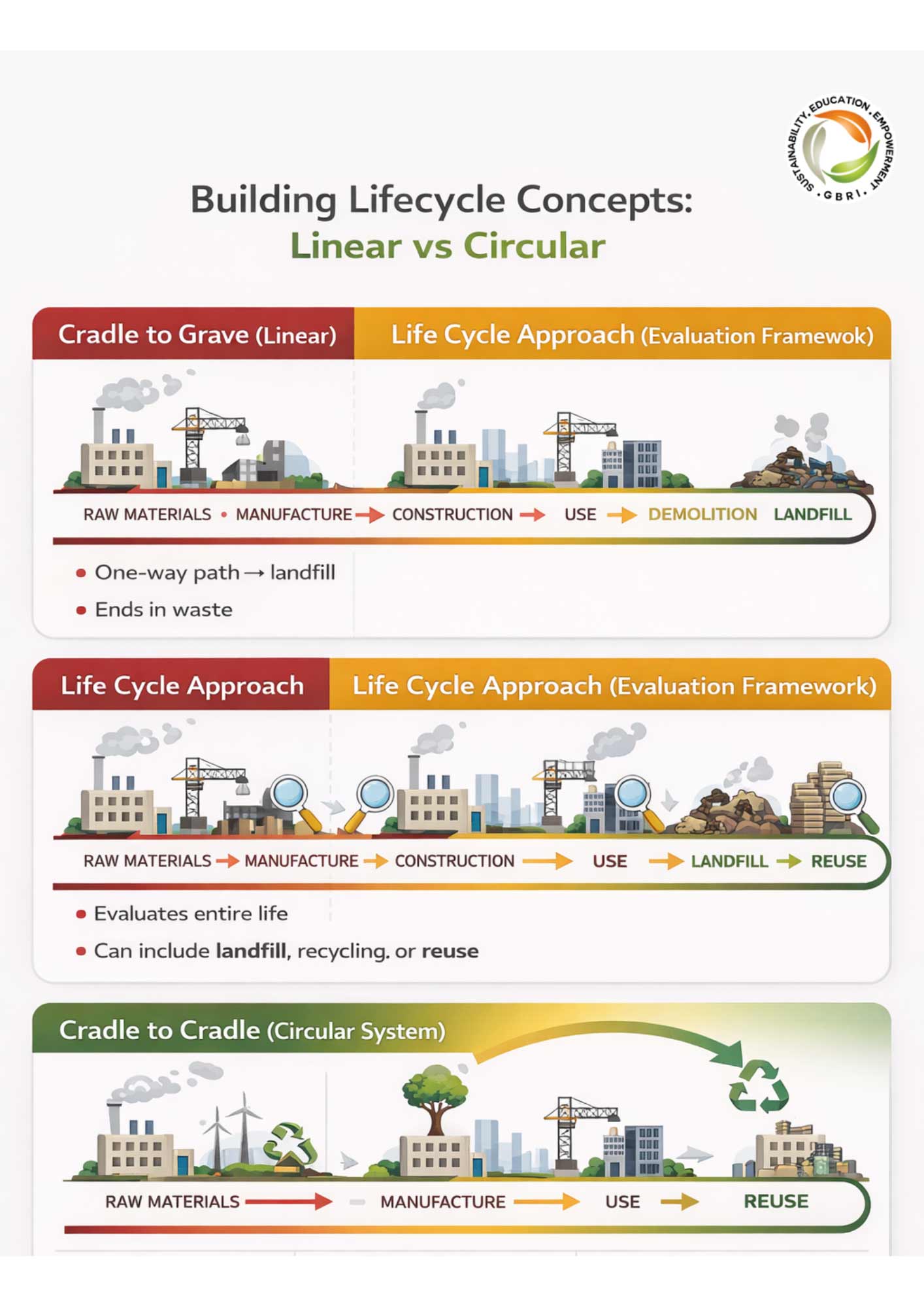
A design approach evaluates a project from material extraction through operation to demolition and recycling at the end of its life. A. Cradle to cradle B. Cradle to grave C. Life cycle approach D. Life cycle costing
C. Life cycle approach
A project is designed so that all materials can be continuously reused in future products without generating waste. A. Life cycle approach B. Cradle to grave C. Cradle to cradle D. Waste diversion
C. Cradle to cradle
👉 Key clue: “no waste / continuous reuse”
👉 Key clue: “no waste / continuous reuse”
A building material is extracted, used in construction, and ultimately disposed of in a landfill at the end of its service life. A. Cradle to cradle B. Cradle to grave C. Life cycle approach D. Circular economy
B. Cradle to grave
👉 Key clue: “disposed / landfill”
👉 Key clue: “disposed / landfill”
A project team analyzes environmental impacts of materials from raw material extraction through manufacturing, operation, and end-of-life scenarios. A. Cradle to cradle B. Life cycle assessment C. Waste management plan D. Integrative process
B. Life cycle assessment
👉 This is more technical → LCA (analysis tool) vs general “approach”
👉 This is more technical → LCA (analysis tool) vs general “approach”
A design strategy focuses on enabling building components to be disassembled and reused in future projects without loss of value. A. Cradle to grave B. Life cycle costing C. Cradle to cradle D. Value engineering
C. Cradle to cradle
👉 Key clue: “disassembled + reused without loss”
👉 Key clue: “disassembled + reused without loss”
A project includes strategies for durability, adaptability, and end-of-life material recovery as part of its sustainability planning. A. Life cycle approach B. Cradle to cradle C. Commissioning D. Integrative process
A. Life cycle approach
👉 Because:
• Adaptability + recovery ≠ perfect loop
• Still broader lifecycle thinking
👉 Because:
• Adaptability + recovery ≠ perfect loop
• Still broader lifecycle thinking
A project team evaluates long-term costs including initial construction, operation, maintenance, and replacement costs. A. Life cycle assessment B. Life cycle costing C. Cradle to cradle D. Value engineering
B. Life cycle costing
👉 Key: $ not environmental impact
👉 Key: $ not environmental impact
Comments
No comments yet. Be the first to post!