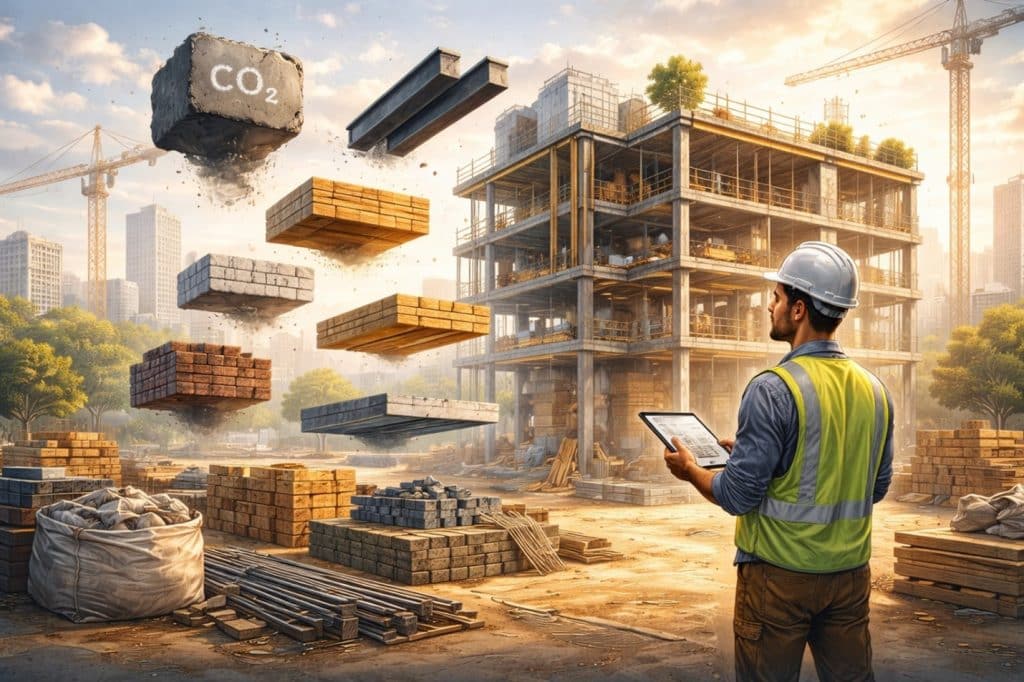
The Materials and Resources (MR) category in LEED v5 represents a fundamental shift in how projects address climate impact, resource use, and supply-chain responsibility. Rather than treating materials as isolated product choices, LEED v5 frames them as interconnected systems that influence embodied carbon, waste generation, human health, and ecological outcomes across the full building life cycle.
This course focuses on MR prerequisites and credits with the strongest and most direct links to decarbonization, circularity, and resilience, including zero-waste planning, construction and operational waste reduction, embodied carbon assessment and reduction, and building and material reuse.
Participants will explore how LEED v5 elevates embodied carbon as a critical climate risk—recognizing that emissions from material extraction, manufacturing, transportation, installation, and disposal already account for a significant share of global emissions and may rival operational carbon in the coming decades. The course also addresses the growing role of circular economy principles, highlighting how waste prevention, reuse, recycling, and composting reduce demand for virgin materials, avoid methane emissions from landfills, and preserve ecosystem capacity.
Throughout the course, a systems-thinking framework is applied, emphasizing how upstream planning decisions influence downstream environmental and operational performance. By understanding how material flows, data transparency, and behavioral strategies interact, project teams can make high-impact choices that deliver immediate carbon reductions while strengthening long-term resilience.
Course Rating: No ratings yet
Total Reviews: 0
Note: Rating is only available after course completion.