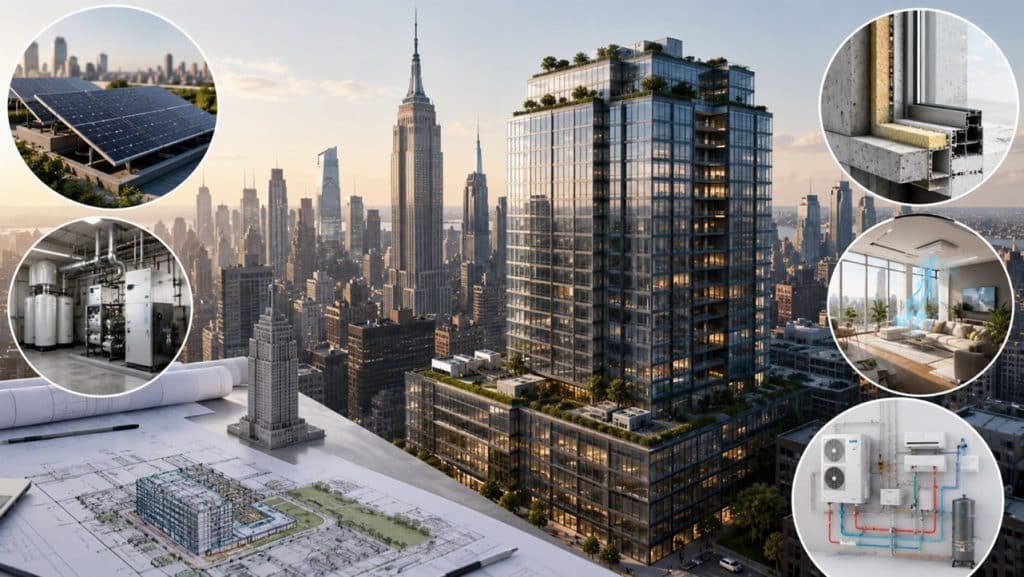
Electrification is rapidly emerging as a key strategy for reducing operational carbon emissions in buildings. This course explores how electrified systems, high-performance building envelopes, and integrated design strategies can support the transition toward low-carbon buildings. Through technical explanations and a real-world case study, participants will examine how high-rise buildings can transition from fossil-fuel-based systems to fully electric operations while maintaining comfort, performance, and resilience. To support different learning styles, this article course also includes a complimentary audio-visual explainer video and infographics designed to reinforce key concepts and provide additional clarity. These supplemental materials are intended to enhance the learning experience and do not replace the primary course article.
Buildings account for a significant portion of global greenhouse gas emissions, largely due to energy used for heating, cooling, and powering equipment. As cities and organizations adopt ambitious climate goals, electrification is becoming an increasingly important strategy for reducing operational carbon emissions in the built environment. This course introduces the concept of building electrification and explores how replacing fossil-fuel-based systems with efficient electric technologies can support long-term decarbonization goals. Participants will examine the distribution of energy use in commercial buildings and explore key electrification strategies such as heat pumps, variable refrigerant flow (VRF) systems, and high-performance building envelopes. The course also examines the technical and design challenges associated with electrifying high-rise buildings and how integrated design approaches can address these challenges. A detailed case study of the Alloy Block development in Brooklyn highlights how electrification strategies can be implemented in a real-world urban project. Finally, the course connects electrification strategies to broader climate frameworks, including the Architecture 2030 Challenge and emerging certification systems such as LEED v5, which increasingly emphasize building decarbonization and operational carbon reduction. Through these discussions, participants will gain a foundational understanding of how electrification can contribute to the transition toward low-carbon buildings and climate-responsive urban development.
Course Rating:
No ratings yet
Total Reviews: 0
Note: Rating is only available after course completion.