0
0
Subtotal: $0.00

No products in the cart.

Return To Shop

Designing Cities as Living Systems: Biomimicry, Systems Thinking, and the Amsterdam City Doughnut

Current Status
Not Enrolled
Price
Free
Get Started
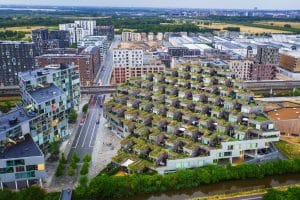
Cities operate as complex systems shaped by ecological limits, social needs, and economic pressures. This course explores how biomimicry and systems thinking inform urban decision-making through the Amsterdam City Doughnut case study, while also examining how LEED for Cities and Communities provides a measurable framework for jurisdiction-scale sustainability performance.

As cities confront climate change, resource constraints, and social inequity, traditional planning modelsโ€”often organized around isolated sectorsโ€”are proving insufficient. Increasingly, urban leaders are turning to systems thinking and biomimicry, learning from how living systems balance resilience, regeneration, and limits over time.

This course examines the Amsterdam City Doughnut as a leading example of biomimicry applied at the city scale. Developed through collaboration between the Doughnut Economics Action Lab, Biomimicry 3.8, Circle Economy, and C40 Cities, the framework provides a holistic lens for understanding urban healthโ€”aligning social foundations with ecological ceilings at both local and global scales.

Rather than focusing solely on individual buildings or technologies, the course reframes the city as a living system defined by flows of energy, materials, water, mobility, governance, and social equity. Participants will explore how Amsterdam translated systems thinking into practical policy direction, circular economy strategies, and climate leadership.

To ground these concepts in measurable performance, the course also introduces LEED for Cities and Communities (v4.1) as an established rating system used by jurisdictions worldwide to track and verify sustainability progress. By comparing the City Doughnut framework with LEED for Cities, learners gain insight into how values-based systems thinking can align with performance-based certification tools. This course connects biomimicry principles with urban governance, climate leadership, resilience planning, and measurable sustainability frameworks. It is designed for planners, architects, engineers, policymakers, sustainability professionals, and public-sector leaders working at the scale of cities and regions.

Course Rating: โ˜… 4 / 5

Total Reviews: 3


Note: Rating is only available after course completion.

โ˜…โ˜…โ˜…โ˜…
David Mirabile โœ“ Verified Student - 2026-04-17 14:02

nicely done

โ˜…โ˜…โ˜…โ˜…
Tanat Satidkit โœ“ Verified Student - 2026-04-17 14:02

Informative

โ˜…โ˜…โ˜…โ˜…
William Barnhart โœ“ Verified Student - 2026-04-17 14:01

Decent case study.

Designing Cities as Living Systems: Biomimicry, Systems Thinking, and the Amsterdam City Doughnut

Course Information

  • โญ Rating: โ˜… 4 / 5
  • โฑ๏ธ Duration: 1 CE
  • ๐Ÿ“š Lessons: 1
  • ๐Ÿ“‘ Topics: 0
  • ๐Ÿ‘จโ€๐ŸŽ“ Enrolled: 0 Students
  • ๐ŸŽ“ Certificate: Yes
Scroll to Top
GBRI is your #1 source for sustainability education with more than 400+ courses to choose from!
gbri-logo

Welcome back!

Login to access your sustainability courses, certificates, badges, community and more!
Celebrate this New Year 2026 With 40% OFF LEED ,WELL, CE & membership Programs!
LEED, WELL, CE & Membership Programs

40% Off

Achieve your sustainability goals for less. Grab your discount before you go.

GBRI

Memorial Day Sale

June 1 to June 15 - 2024

GBRI

Annual Day Sale

March 15 to April 21 - 2024

The journey to become a sustainability guru begins here!
Jeslin Varghese
gbri-logo

Sustainability education should not have any boundaries!

Register now to get started.

OR REGISTER WITH